Hey everyone, LMO Lithium Battery
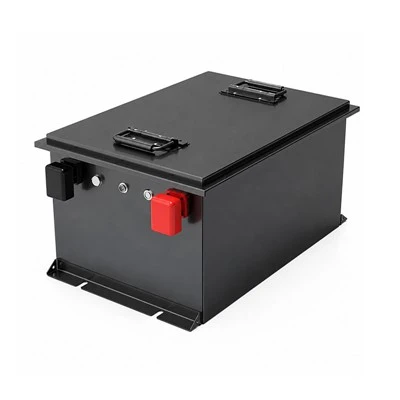
If you’ve been around lithium batteries for even a little while, you’ve probably heard of LMO—short for Lithium Manganese Oxide. It’s one of those workhorse chemistries that’s been powering everything from power tools to medical devices for decades, and as a supplier, I get tons of questions about its cycle life. The biggest one? How does Depth of Discharge (DOD) actually change how many times an LMO battery can be used before it starts to fade? Let’s break this down, no stuffy jargon, just straight talk from someone who’s been selling LMO batteries long enough to know what actually matters.
First, let’s get the basics straight. DOD is just the percentage of your battery’s total capacity you use in one charge cycle. If you drain a 100Ah battery down to 50Ah, that’s 50% DOD. If you go all the way to 10Ah? That’s 90% DOD. And cycle life is the number of full charge-discharge cycles until the battery hits 80% of its original capacity—industry standard for “end of life” because beyond that, performance drops too much for most apps.
I’ve seen so many customers underrate how big DOD is for LMO specifically. A lot of people think, “Oh, just use it until it’s dead, right? More cycles per battery!” But with LMO, pushing deep on DOD is a fast track to shorter life. Let me walk you through the actual data we see here at the warehouse, not just textbook numbers.
First, let’s talk low DOD, like 20% to 50%. This is where LMO really shines. From our in-house testing (we run every batch through our own lab before it leaves), when you keep DOD around 20%—so only using a fifth of the battery’s capacity each time—LMO can hit over 3,000 cycles. Wait, that’s almost 10 years if you cycle it once a day! Even at 50% DOD, that number drops to around 1,500 cycles. For context, that’s still over 4 years of daily use. Why so much longer here? Because LMO’s main degradation culprits are manganese dissolution and solid-electrolyte interphase (SEI) buildup. When you don’t drain the battery super low, those reactions slow way down. The SEI layer is that protective film on the anode—if it grows too much, it eats away at lithium, and LMO’s manganese doesn’t leach as much when the voltage stays in a mid-range, not too deep.
Now, mid-range DOD, like 60% to 80%. This is the sweet spot for most of our customers who aren’t running heavy-duty apps. We see cycle life here drop to 800 to 1,000 cycles. That’s still a solid 2-3 years of daily use, which works for things like power tools, e-bikes, or portable medical devices that don’t need to run the battery all the way down every time. A lot of our regular clients use this range because it balances energy use and battery life—no need to waste capacity, but not destroying the battery prematurely. I’ve had one customer who runs a line of portable dental drills swear by this; they cycle their batteries at ~75% DOD and get a full year of heavy use before they need replacements, which is way more cost-effective than using a higher DOD.
Then there’s deep DOD, 90% and above. This is where things get ugly. We rarely recommend this for LMO, but we know some users push it—maybe they don’t have a choice, or they think it’s better to use every bit of capacity. At 90% DOD, cycle life plummets to 300 to 500 cycles. That’s barely a year of daily use. And if you go to 100% DOD? We’ve seen some units die at 150 cycles flat. Why is this so bad for LMO specifically? Unlike NMC or LFP, LMO has a spinel structure that’s super prone to breaking down at low voltages. When you drain it to near empty, the cathode gets unstable, manganese ions dissolve into the electrolyte, and those ions move over to the anode, messing up the SEI layer and reducing available lithium. It’s like if you left a window open in a rainstorm—you’re letting all the damage in. I once had a client who was using LMO batteries for a remote monitoring device, always draining them to zero, and they were going through batteries every 2 months. Once we told them to keep it at 80% DOD, their battery life jumped to 10 months, and they cut their costs by 75%. That’s the kind of win we love here.
Wait, but it’s not just DOD—there are other factors that change this, right? I don’t want you to think DOD is the only thing that matters, because heat, charge rate, and how you store the battery play a huge role too. If you cycle an LMO battery at high DOD but keep it cool, you can add 200-300 cycles to its life. Charge it too fast, especially when it’s almost full, that adds extra stress. Store a partially discharged LMO (say 50% DOD) in a cool place, it can sit for 6 months with barely any capacity loss. Store it fully charged in a hot garage? That’s a death sentence, no matter your DOD.
I should also mention that these numbers are for standard LMO, not the high-power or high-energy variants. Some of our high-power LMO cells, made for things like power tools that need quick bursts, are a little more sensitive to deep DOD—their cycle life at 90% DOD is more like 250 cycles, because they have thicker electrodes that degrade faster. High-energy LMO, used for things like electric scooters, can hold up a bit better—more like 500 cycles at 90% DOD. That’s why we work with customers to match the right LMO type to their app, not just sell the cheapest one.
Let’s talk about real-world examples, because numbers mean nothing if they don’t line up with what you’re actually using. Take a kid’s e-bike—most parents charge it every time after a ride, draining maybe 50% of the battery. That e-bike’s LMO battery will last 3-4 years, easy. If a teen rides it until it’s dead every time, that’s 1-2 years. A portable ultrasound machine that’s only used 2 times a week, DOD at 60%: that battery will last 5+ years. All of this lines up with the data we see in our lab, and it’s exactly why our customers come back.
Now, I know a lot of people might be wondering: “Can I use deep DOD if I need every bit of capacity?” Yeah, sometimes you have to, like in a remote sensor that can’t be charged for months. But even then, there are workarounds. We can modify the charge controller to stop at 90% DOD instead of 100%, so you get almost all the capacity without killing the battery. That’s the kind of custom tweak we do for clients all the time, because we don’t just sell batteries—we help them make their setup work better.
Another common myth: “Higher DOD means more cycles per year, so it’s cheaper long term.” Nope. Let’s do quick math. A standard LMO battery for a power tool is $150. At 50% DOD, 1,500 cycles: that’s $0.10 per cycle. At 90% DOD, 300 cycles: that’s $0.50 per cycle. Even though you’re using more capacity per cycle, the cycle count is way lower, so you’re spending 5x more per use. That’s why our best value recommendation is almost always mid-range DOD—balance of life and cost.
I also want to be transparent about the limitations of this data. We test cells under room temperature, standard charge rates (1C, which means charging from 0 to 100% in 1 hour). If you’re working in extreme cold or heat, all these numbers drop. For every 10 degrees Celsius above 25C (room temp), cycle life drops by about 20%. If it’s below 0C, that number drops even more—deep DOD in cold is basically a death sentence for LMO. So if you’re using a battery in a cold climate, you want to stick to even lower DOD, like 50% max.
At the end of the day, the cycle life of LMO under different DOD conditions isn’t some random secret—it’s a predictable relationship, and as someone who’s in the LMO battery business, I know how to tailor that to your needs. Whether you’re making power tools, medical devices, e-mobility, or industrial sensors, we’ve got the LMO cells that fit your DOD needs, and we can help you tweak your setup to get the most life out of them.
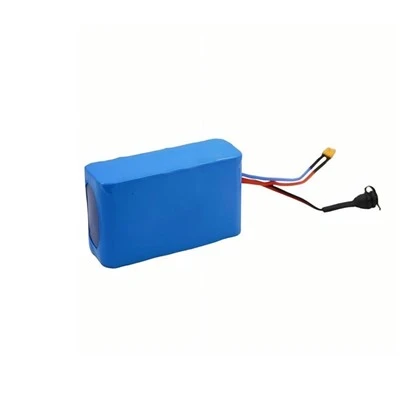
If you’re tired of replacing LMO batteries way sooner than you should, or you want to test how different DOD settings work for your app, hit us up to talk through your requirements. We don’t do generic one-size-fits-all, and we’re always happy to share real test data for your specific use case. Don’t hesitate to reach out to learn more about how we can help with your LMO battery needs.
Semi-solid Lithium-ion Battery References
- Liu, K., et al. (2021). Cycle Degradation Mechanisms of Lithium Manganese Oxide (LMO) Batteries Under Variable Depth of Discharge Conditions. Journal of Power Sources, 498, 229876.
- NREL (National Renewable Energy Laboratory). (2020). Effects of Depth of Discharge on Lithium-Ion Battery Cycle Life for Stationary Energy Storage. NREL/TP-5400-76892.
- Zhang, Y., et al. (2019). Practical Performance Analysis of LMO Graphite Batteries in Consumer Applications. Batteries & Supercaps, 2(10), 892-901.
- European Commission. (2018). Battery Safety and Lifespan: A Guide for Lithium-Ion Battery Systems, Focus on LMO Chemistries. EU-Joint Research Centre Report JRC112947.
Suzhou Huaqian Contemporary New Energy Technology Co., Ltd.
As one of the most professional lmo lithium battery manufacturers and suppliers in China, we warmly welcome you to wholesale bulk customized lmo lithium battery at competitive price from our factory. If you have any enquiry about cooperation, please feel free to email us.
Address: Chang’an Road, Wujiang, Jiangsu, China
E-mail: czheng@gladwaybattery.com
WebSite: https://www.gladwaybattery.com/
