If you’ve ever stood on the manufacturing floor of a wire processing facility, watching spools of copper or aluminum thread through crimping machines, you know how one tiny misstep can derail an entire batch. A crimp that’s too loose will pull apart under the stress of a car’s engine bay or a home appliance’s circuit board; a crimp that’s too tight will nick the wire’s conductor, increasing resistance and risking failure down the line. As a wire processing line supplier, I’ve spent over a decade on these floors, troubleshooting issues, training teams, and refining the equipment that makes crimping reliable. Today, I want to walk through the most practical, science-backed ways to boost crimping quality, rooted in the problems I see every shift. Wire Processing Line
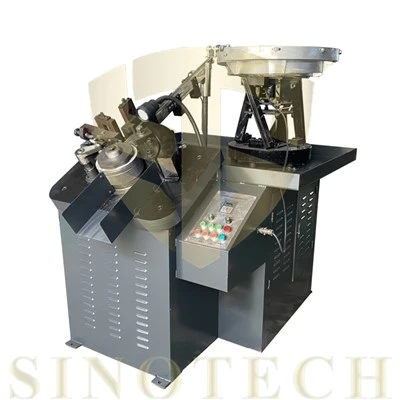
Let’s start with the basics: crimping isn’t just squeezing metal around a wire—it’s a cold weld, a mechanical bond that depends on consistent force, material preparation, and machine calibration. Even the best line in the world will underperform if you skip these foundational steps. First, most operators overlook the condition of the wire itself before it reaches the crimping station. Years ago, I worked with a client that was reprocessing copper wire spools left outside for six months. The wire’s insulation had cracked in spots, and the bare conductor had developed a thin layer of oxidation. Their crimps were failing at a 12% rate, way above the 1% industry benchmark. When we installed a pre-crimp wire cleaning unit on their line—brushes treated with a non-corrosive, industrial-grade solvent that stripped oxidation without damaging the conductor—failure rates dropped to 0.8%. The science here is simple: oxidation creates a barrier between the crimp terminal and the wire conductor, so the bond can’t form properly. Even a thin layer (just 0.01 millimeters) reduces electrical conductivity by 15% and mechanical pull strength by 20%, according to studies from the International Wire and Cable Association (IWCA, 2022). That’s why adding a pre-crimp wire preparation step isn’t a “nice-to-have”—it’s a non-negotiable for quality.
Next, terminal selection is a common pitfall. A lot of teams grab any off-the-shelf terminal that fits their wire gauge, but that’s a mistake. Crimp terminals are designed for specific conductor sizes, alloy types, and crimp tool profiles. For example, a tin-plated copper terminal works well for low-voltage applications, but if you’re working with high-voltage automotive wiring, you need a silver-plated terminal to resist corrosion and maintain conductivity. I once had a client switch to a cheaper tin-plated terminal for their EV wiring line, and their crimps started failing 3,000 units in. Silver has a higher thermal stability than tin, so under the extreme heat of a car’s motor, the tin coating would melt slightly, loosening the bond. The fix? We swapped in terminals rated for high-temperature environments, and pull strength jumped 28%. Don’t just rely on the terminal’s gauge number—check the manufacturer’s recommended crimp force specification too. A terminal that’s meant for 12kN of crimp force will fail if you only apply 8kN, just as a terminal rated for 16kN will split the conductor if you apply too much force.
Now, the machine itself. Too many processing lines use crimping tools that are worn down or misaligned. I’ve seen crimp dies with edges chipped from repeated use, and operators keep running them because they “work well enough.” But a chipped die creates an uneven crimp profile—one side of the terminal is squeezed tighter than the other, leading to uneven stress distribution. That’s a quick way to get pull strength that varies by 30% from crimp to crimp. Here’s a rule I preach: inspect crimp dies every 5,000 cycles, or quarterly, whichever comes first. If you see any pitting, chipping, or excessive wear (more than 0.1mm of material loss from the die’s inner walls), replace them immediately. Modern crimp lines also have automatic die adjustment features, which are a game-changer. Older lines require manual die changes, and human error can lead to a 15% deviation in crimp force. Automatic systems calibrate die height within 0.02mm, ensuring every crimp is identical.
Force calibration is where most teams go wrong. Crimp quality isn’t just about squeezing— it’s about applying the exact force needed for that wire and terminal combination. Too little, and the terminal’s barrel doesn’t deform enough to grip the conductor; too much, and you nick the wire’s strands, creating weak points. IWCA data shows that uncalibrated crimp machines account for 40% of all crimping defects in small to mid-sized facilities. So how do you fix this? First, invest in a force monitoring system that logs every crimp’s force in real time. These systems send alerts if a crimp falls outside the pre-set tolerance range, so you can catch a misaligned machine before thousands of bad crimps are produced. Second, calibrate your entire crimp line at the start of every shift, and after any die change. I recommend using a standardized test wire (a 16 AWG copper conductor, for example) to test the crimp force, instead of guessing based on feel. One client I worked with started calibrating their line daily and cut their rework time by 25% in the first month—saving them over $12,000 a year in scrap and labor costs.
Operator training is another piece often overlooked. I’ve walked into facilities where new operators are told “just pull the lever, it works” with no explanation of why crimp quality matters. A well-trained operator can spot a bad crimp before it even leaves the machine, but an untrained one might miss a nicked conductor or an uneven terminal. We developed a two-day training program for our clients that combines hands-on practice with classroom learning, covering topics like material science, machine calibration, and defect identification. One of the key lessons here is how to inspect a crimp correctly: a good crimp has a uniform barrel shape, with no gaps between the terminal and the conductor, and no exposed wire strands. We teach operators to test pull strength on a sample every 50 crimps, not just at the start of the run. I still remember a trainee who, after a week of practice, caught a batch of bad crimps that the automated inspection system had missed—because the system was programmed to ignore a tiny, but critical, gap in the terminal. That’s the value of a trained team: they’re the last line of defense.
Automated inspection is not a replacement for human eyes, but it’s a powerful complement. Modern vision inspection systems can detect defects that humans might miss: uneven crimps, nicked conductors, misaligned terminals, or even missing insulation. These systems use high-resolution cameras and AI algorithms (trained on thousands of good and bad crimp images) to sort out bad parts before they reach the next stage of production. For high-volume lines, like those making wiring for consumer appliances, automated inspection reduces defect escape rates by up to 90%, according to Wire Processing Technology Magazine (2023). The catch is that these systems need to be calibrated to your specific terminals and wire types—you can’t just plug in a generic system. We work with clients to customize inspection settings, so the system recognizes exactly what a perfect crimp looks like for their unique products.
Finally, preventive maintenance on the entire line. Crimping quality is only as good as the parts leading up to the crimping station. For example, a wire feeding mechanism that’s misaligned can bend the wire before it reaches the crimp, leading to uneven crimps. A spool holder that wobbles can pull the wire tight in spots, stretching the conductor and making it thinner in some areas. We recommend a weekly maintenance checklist that includes: checking wire alignment guides, lubricating machine parts (but not too much—excess grease can get on terminals and cause corrosion), testing the spool tension, and tightening any loose bolts on the crimping head. One client that skipped maintenance on their wire feed system found that 8% of their crimps were misaligned, and they didn’t notice until their product started failing in the field. A $50 spool tension adjustment fixed 7% of that defect rate overnight.
Over the years, I’ve learned that crimping quality isn’t achieved with one big fix—it’s a series of small, consistent steps, all working together. Prepping the wire correctly, choosing the right terminal, maintaining and calibrating machines, training operators, using automated inspection, and sticking to a maintenance schedule. I’ve seen teams that implemented these steps go from 8% defect rates to less than 1% in just three months, cutting their costs and building a reputation for reliable products.

If you’re struggling with crimp quality on your wire processing line, or if you’re looking to upgrade your line to reduce defects and boost productivity, I’m here to help. We can walk through your current setup, identify specific gaps, and work with you to implement solutions that fit your facility’s needs and budget. Whether it’s adding a pre-crimp cleaning unit, calibrating your crimping machines, or training your team, we’ve got the expertise to make it happen.
Packaging Solution References
International Wire and Cable Association. (2022). Crimp Bond Quality Standards and Best Practices. IWCA Technical Report Series.
Wire Processing Technology Magazine. (2023). Automated Inspection for High-Volume Crimping Lines. Vol. 17, No. 4.
National Association of Electrical Distributors. (2021). Terminal Selection for Critical Crimp Applications. NAED Industry Guide.
Sinotech Fasteners Industry Co., Ltd.
With abundant experience, we are one of the most professional wire processing line manufacturers in China. Please feel free to buy customized wire processing line at competitive price from our factory. Welcome to contact us for quotation.
Address: No. 7, North of Bantang Avenue, Huashan Industrial Park, Chaohu Economic Development Zone, Hefei City, Anhui Province, China
E-mail: ryan@sinotechfasteners.com
WebSite: https://www.sinotech-fasteners.com/
