Hey there! I’m a supplier of self – tapping inserts, and today I wanna chat with you about the chemical composition of these nifty little things. Self-Tapping Inserts
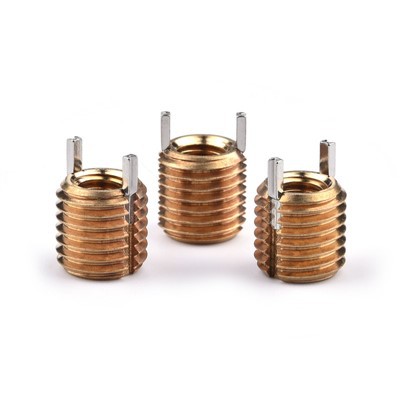
First off, let’s talk about what self – tapping inserts are for those who might not know. They’re used to create durable threads in materials like plastic, wood, or metal. When you screw a bolt into a material with a self – tapping insert, it cuts its own threads as it goes, providing a strong and reliable connection.
Now, the chemical composition of self – tapping inserts can vary quite a bit, depending on what they’re made for and what kind of environment they’ll be used in.
Common Materials and Their Chemical Makeup
Steel
Steel is one of the most commonly used materials for self – tapping inserts. Most steels are mainly composed of iron (Fe) and carbon (C). Iron is the base element, providing the insert with strength and structure. Carbon is added in small amounts, usually between 0.03% and 1.7% by weight. The more carbon, the harder and stronger the steel becomes, but it also gets more brittle.
Besides iron and carbon, other elements are often added to enhance certain properties. Manganese (Mn) is usually present in amounts of about 0.25% – 1.65%. It helps improve the hardness and strength of the steel, and it also acts as a deoxidizer during the steel – making process.
Silicon (Si) is another common addition, typically around 0.1% – 0.6%. It helps with the strength and hardness of the steel and also improves its resistance to oxidation.
Chromium (Cr) might be added in some stainless – steel self – tapping inserts. Stainless steel is known for its corrosion resistance, and chromium is the key element for that. A minimum of about 10.5% chromium by weight is usually required to form a passive oxide layer on the surface of the steel, which protects it from rust and other forms of corrosion.
Nickel (Ni) is also used in some high – performance stainless steels. It helps improve the ductility and toughness of the steel, making it more resistant to cracking under stress.
Brass
Brass is an alloy of copper (Cu) and zinc (Zn). The copper content in brass can range from about 55% to 95%, with the rest being zinc. The exact ratio of copper to zinc determines the properties of the brass.
Brass is a popular choice for self – tapping inserts because it’s relatively easy to machine, has good corrosion resistance, and is electrically conductive. When the zinc content is lower (around 30% or less), the brass is more ductile and is often used for applications where the insert needs to be bent or formed. Higher – zinc brasses (around 40% zinc) are harder and stronger, which is great for inserts that need to withstand more stress.
Some brasses may also contain small amounts of other elements like lead (Pb), tin (Sn), or aluminum (Al). Lead is sometimes added in small quantities (less than 3%) to improve the machinability of the brass. Tin can enhance the corrosion resistance of brass, especially in marine environments. Aluminum can strengthen the brass and improve its resistance to oxidation.
Plastic
Plastic self – tapping inserts are becoming more and more popular, especially in applications where weight reduction is important. There are many types of plastics used for these inserts, but two of the most common are nylon and polycarbonate.
Nylon is a polymer made up of repeating units called amide groups. It’s known for its high strength, good abrasion resistance, and low friction coefficient. The chemical structure of nylon gives it excellent toughness and flexibility, which makes it suitable for self – tapping inserts in plastic or soft – metal materials.
Polycarbonate is another type of plastic with a unique chemical structure. It’s made up of carbonate groups linked together by aromatic rings. Polycarbonate is extremely strong, has high impact resistance, and is transparent in its pure form. These properties make it a good choice for self – tapping inserts in applications where the insert needs to be visible or where it will be exposed to high – impact forces.
Why Chemical Composition Matters
The chemical composition of self – tapping inserts is crucial because it directly affects their performance. For example, if you’re using a self – tapping insert in a corrosive environment, a stainless – steel insert with a high chromium content is a must. The chromium forms a protective oxide layer that prevents the steel from rusting, ensuring the insert will last a long time.
On the other hand, if you need an insert that can be easily machined and has good electrical conductivity, brass might be the way to go. Its chemical makeup gives it the right balance of properties for these applications.
For plastic inserts, the chemical structure of the polymer determines its strength, flexibility, and resistance to heat and chemicals. Nylon is great for applications where some flexibility is needed, while polycarbonate shines in high – impact situations.
Our Range of Self – Tapping Inserts
As a supplier, I’m proud to offer a wide range of self – tapping inserts with different chemical compositions. Whether you need a high – strength steel insert for a heavy – duty application, a corrosion – resistant brass insert for a marine environment, or a lightweight plastic insert for a consumer product, we’ve got you covered.
We understand that every customer has unique needs, and that’s why we’re committed to providing inserts that are made with the right chemical composition for your specific application. Our team of experts can help you choose the best insert based on your requirements, ensuring you get the best performance and value for your money.
Let’s Connect!
If you’re in the market for self – tapping inserts, I’d love to have a chat with you. Whether you have questions about the chemical composition, need advice on which insert is right for your project, or you’re ready to place an order, don’t hesitate to reach out. We’re here to make the process as easy and hassle – free as possible for you.
Key Locking Inserts Let’s work together to find the perfect self – tapping inserts for your needs!
References
- "Metals Handbook Desk Edition", ASM International
- "Handbook of Plastics, Elastomers and Composites", Charles A. Harper
- Technical data sheets from leading manufacturers of self – tapping inserts
Locking Inserts Technologies Co., Ltd.
As one of the most professional self-tapping inserts manufacturers and suppliers in China, we’re featured by quality products and good service. Please rest assured to wholesale bulk self-tapping inserts in stock here from our factory. Also, custom service is available.
Address: 205, 2/F, Bldg. A8, Zhizaogu Ind. Park, No.26 Xingye 5th Rd, Bao’an Dist., Shenzhen, Guangdong, P.R.China
E-mail: sales@lockinginserts.com
WebSite: https://www.lockinginserts.com/
