Hey there! I’m a supplier of sheet metal parts. Over the years, I’ve gotten tons of questions from customers about how to calculate the weight of sheet metal parts. It’s a pretty common concern, especially when it comes to shipping costs, material budgeting, and overall project planning. So, I thought I’d share some tips and tricks on how you can do this calculation easily. Sheet Metal Parts
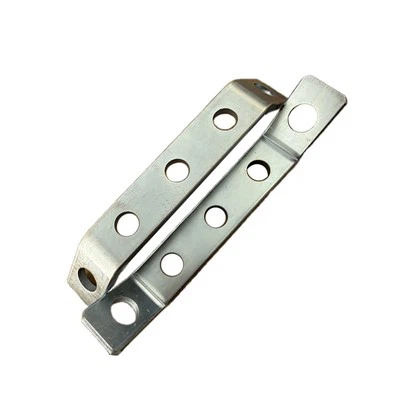
First off, let’s talk about why calculating the weight of sheet metal parts is so important. When you’re working on a project, you need to know how much your parts weigh. This helps you estimate shipping costs accurately. You don’t want to be caught off guard with a huge shipping bill because you underestimated the weight. Also, if you’re buying materials, knowing the weight helps you calculate how much you’ll need to order. It saves you money by avoiding over – ordering or under – ordering.
Now, the basic formula for calculating the weight of sheet metal is pretty simple. The formula is:
Weight = Volume x Density
Let’s break this down.
Volume Calculation
The volume of a sheet metal part depends on its shape. For a simple rectangular sheet, the volume formula is:
Volume = Length x Width x Thickness
For example, if you have a rectangular sheet of metal that’s 2 meters long, 1 meter wide, and 0.01 meters thick, the volume would be:
Volume = 2m x 1m x 0.01m = 0.02 cubic meters
But what if your sheet metal part isn’t a simple rectangle? Well, for more complex shapes, you might need to break the part down into smaller, more manageable shapes. For instance, if you have a part that looks like a T – shape, you can break it into two rectangles, calculate the volume of each rectangle separately, and then add them together.
Another thing to keep in mind is that sometimes, sheet metal parts have holes or cut – outs. In that case, you need to calculate the volume of the holes or cut – outs and subtract them from the total volume of the part without the holes. For a circular hole, the volume formula is:
Volume of a circular hole = π x (Radius)^2 x Thickness
Let’s say you have a rectangular sheet with a circular hole in it. First, calculate the volume of the whole rectangle as we did before. Then, calculate the volume of the circular hole. If the radius of the hole is 0.1 meters and the thickness of the sheet is 0.01 meters, the volume of the hole would be:
Volume of the hole = π x (0.1m)^2 x 0.01m ≈ 0.000314 cubic meters
Subtract this volume from the volume of the rectangle to get the actual volume of the sheet metal part.
Density of Sheet Metal
The density of sheet metal varies depending on the type of metal. Here are some common densities:
- Steel: The density of steel is approximately 7850 kg/m³.
- Aluminum: Aluminum has a density of about 2700 kg/m³.
- Copper: Copper’s density is around 8960 kg/m³.
Let’s go back to our example of the rectangular sheet of steel we calculated the volume for earlier. The volume was 0.02 cubic meters. Since the density of steel is 7850 kg/m³, we can calculate the weight using the formula:
Weight = Volume x Density
Weight = 0.02 m³ x 7850 kg/m³ = 157 kg
If it was an aluminum sheet with the same volume, the weight would be:
Weight = 0.02 m³ x 2700 kg/m³ = 54 kg
Using Online Calculators
If you’re not a fan of doing math by hand, there are plenty of online calculators available. These calculators are super easy to use. You just need to enter the dimensions of your sheet metal part (length, width, thickness) and select the type of metal. The calculator will then do all the work for you and give you the weight.
However, while online calculators are convenient, it’s still a good idea to know how to do the calculations yourself. That way, you can double – check the results and make sure there aren’t any errors.
Factors Affecting Weight Calculation
There are a few factors that can affect the accuracy of your weight calculation. One of them is the surface finish. If the sheet metal has a thick coating or plating, it will add some weight to the part. You might need to estimate the thickness of the coating and calculate its volume and weight separately.
Another factor is the tolerance of the sheet metal. Sometimes, the actual thickness of the sheet might be slightly different from the specified thickness. This can cause a small error in your weight calculation. To minimize this error, it’s a good idea to measure the thickness of the sheet at multiple points.
Importance of Accurate Weight Calculation for Suppliers
As a supplier of sheet metal parts, accurate weight calculation is crucial for us. It helps us give our customers accurate quotes. We don’t want to under – quote and end up losing money on a project, and we also don’t want to over – quote and scare away potential customers.
Accurate weight calculation also helps us manage our inventory better. We can order the right amount of raw materials based on the weight requirements of our customers’ projects. This reduces waste and saves us money in the long run.
Conclusion
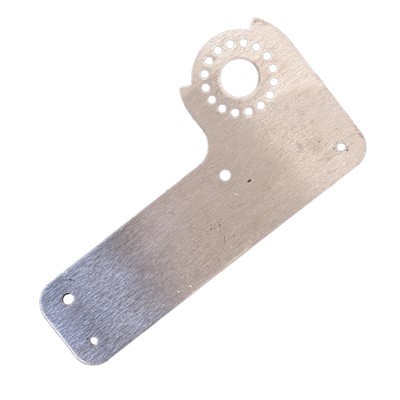
Calculating the weight of sheet metal parts might seem complicated at first, but once you understand the basic formula and how to calculate the volume and density, it’s actually pretty straightforward. Whether you’re a customer planning a project or a supplier like me, accurate weight calculation is essential for cost – estimation, shipping, and inventory management.
Sheet Metal Parts If you’re in the market for high – quality sheet metal parts and need help with weight calculation or have any other questions, don’t hesitate to reach out. We’re here to assist you with all your sheet metal needs. Whether it’s a small custom part or a large – scale production order, we’ve got you covered. Contact us today to start a conversation about your project and get a competitive quote.
References
- Machinery’s Handbook: A comprehensive reference for mechanical engineers and metalworkers, which provides detailed information on the properties of different metals, including density.
- Metal Fabrication Manuals: These manuals often contain practical guidelines on calculating the weight of sheet metal parts and other fabrication processes.
Hebei Kailu Hardware Manufacturing Co., Ltd.
We’re well-known as one of the leading sheet metal parts manufacturers and suppliers in China, also support customized service. Welcome to buy high quality sheet metal parts made in China here and get free sample from our factory. For price consultation, contact us.
Address: Yaojiubo Village, Nanpi Town, Nanpi County, Cangzhou City, Hebei Province
E-mail: 714184486@qq.com
WebSite: https://www.weldedpart.com/
