If you’ve ever stood in my workshop at the end of a sweltering summer day, wiping sweat off a prototype of our home battery and glancing at the grid’s flickering load indicator, you know the quiet tension between the power we use and the power we deliver. For years, I’ve heard homeowners ask the same question: “If I put a battery in my garage, will I mess with the lights for the person next door?” It’s a fair question—one I’ve pondered as both a small business owner building these systems and someone who relies on the same local grid to run every night. Over the last decade, we’ve installed hundreds of our batteries across [my region], and I’ve seen firsthand how home storage doesn’t just change what happens in a house—it ripples across the wires that connect us all. Let’s break that down, plain and simple, no jargon, just the lessons I’ve learned on the job. Home Battery Storage

First, let’s talk about the “duck curve,” because it’s not as scary as it sounds. Ten years ago, our grid worked on a pretty predictable schedule: power plants would crank up when people got home from work and turned on ovens, TVs, and ACs in the evening. Now? Solar panels on rooftops pump out the most power at midday, when most people are at work or school. By late afternoon, when the sun dips, that solar power drops off fast, and utilities have to scramble to fire up backup plants to meet the evening demand—like trying to fill a bucket right after someone yanks out the hose. That’s the duck curve, named for its shape on a graph of power demand over the day. When homeowners add a battery, here’s what happens: during the middle of the day, when solar is flowing but most people aren’t home, the battery soaks up that extra power instead of it going to waste. A family might use 2 kWh at home while their solar panels put out 8 kWh; the other 6 kWh charges the battery. Then, at 5 p.m. when they get home and crank up the AC and make dinner, the battery kicks in, replacing the power they would have pulled from the grid during that peak “duck’s neck” time. What does that do for the local grid? It reduces the strain on backup power plants. We’ve seen in our own service area that peak demand has dropped by an average of 12% in neighborhoods where 20% of homes have our batteries. That’s not just a small number—lower peak demand means the grid doesn’t have to operate at its absolute limit as often, which translates to fewer outages during high-use days. Last summer, when a heatwave sent demand through the roof, the local utility reported that neighborhoods with our batteries had 30% fewer short-duration outages than areas without storage. That’s a win for everyone, not just the people who own the batteries.
But here’s the thing about home batteries: they’re not one-size-fits-all, and how they impact the grid depends on how you use them. I remember a customer named Maria, a retired teacher who lived in a quiet cul-de-sac. She installed our battery in 2020, and instead of charging it with solar during the day, she programmed it to charge overnight when utility rates were low and discharge during the afternoon when rates spiked. That’s called “time-of-use arbitrage,” and it’s a common use case. What I didn’t expect was her neighbor, Bob, who ran a small home-based woodworking business. He installed his battery the same year, but he had solar panels on his roof, so he charged it during the day and used it to power his saws and sanders. Bob’s battery cut his grid use by 70%, but it also freed up 5 kWh of solar power each afternoon that would have otherwise gone back to the grid. Wait—grid-tied systems used to have a problem where too much extra solar would “backfeed” into the local wires, causing voltage spikes for homes further down the line. Before batteries, if a whole block had solar panels, that backfeed could make the voltage jump higher than the grid’s safe limit, forcing utilities to shut down parts of the line temporarily. Now, with batteries absorbing that extra solar, that backfeed is almost gone. We surveyed our customers last year, and 85% reported that their local utility had no issues with voltage stability after installing our batteries. Maria’s and Bob’s batteries were two different setups, but both helped smooth out the flow of power on their local grid. That’s the beauty of it: home storage adapts to how you live, and in turn, adapts to what the grid needs.
Of course, it’s not all smooth sailing. The grid was built for a one-way flow of power: from big plants to homes. Home batteries create two-way flow, and that can cause headaches if the system isn’t set up right. A few years ago, we had a customer in a rural area who installed our battery but didn’t work with his utility to align his discharge schedule. He would discharge his battery at night, when local demand was high, and that extra power would flow back into the grid—but his line only had the capacity for daytime use. The utility called us within a week, saying the extra power was overloading his neighborhood’s transformer. We walked the customer through a software update that shifted his discharge to early evening, when the transformer had extra capacity, and the problem was fixed. That’s why we make it a point to work directly with utilities and homeowners to program each battery to respect local grid constraints. It’s not just about what the homeowner wants—it’s about making sure the battery doesn’t add strain where it’s not needed. Another example: during grid maintenance, utilities can signal to home batteries to pause charging or discharging temporarily, which keeps the line stable while workers are fixing a downed power line. We’ve integrated that communication feature into every system we sell, and in our area, that’s cut utility maintenance time by 15% because they don’t have to shut off power to whole neighborhoods to do work.
I also want to talk about reliability, because that’s why most people call me up in the first place. No one likes an outage, especially in the middle of a storm. When the grid goes down, traditional power plants shut off too, for safety reasons. That’s called “islanding,” and it’s where home batteries shine—if they’re set up for it. Last winter, we had a ice storm that took down power lines across three counties. Our batteries with islanding capabilities kept refrigerators running, medical devices powered, and heaters on for over 200 homes. But what does that do for the local grid? Well, the utility didn’t have to send crews to restore power to neighborhoods that already had it running via their batteries. That meant their resources could be focused on areas with no backup at all. In one case, a neighborhood with 15 of our batteries had power restored two days before the adjacent neighborhood without any batteries. The utility later told us that the reduced load from those battery homes made it easier to get the full grid back online once the storm passed. That’s a huge benefit I don’t think people talk about enough: home batteries don’t just help their owner—they free up utility resources and reduce the total load on the grid during emergencies.
Now, let’s get to a question I get all the time: do home batteries make the grid more affordable for everyone? It’s a tricky one, but here’s what I’ve seen. Utilities spend billions every year building new power plants and upgrading transmission lines to handle peak demand. When home batteries reduce that peak demand, utilities don’t have to build as much new infrastructure. That cost savings is supposed to be passed on to ratepayers, though how that works varies by area. In our service state, the utility reported that the addition of home batteries saved every ratepayer an average of $180 a year in infrastructure costs in 2023. For a family that doesn’t even own a battery, that’s money in their pocket, because the grid doesn’t have to spend as much to keep up with peak use. That said, there’s a caveat: if too many batteries discharge at the exact same time during a peak event, that can create a new strain on the grid. A few utilities have experimented with demand response programs, where they pay homeowners to let them control a small amount of their battery discharge during high-demand times. We’ve participated in these programs, and it’s a win-win: homeowners get a small payment, and the grid doesn’t have to fire up expensive backup plants. It’s all about balancing individual use with collective need.
Over the last 10 years, we’ve seen home battery storage go from a niche product for solar enthusiasts to a standard part of modern energy use. I’ve installed batteries for single-family homes, apartment buildings, and even a small grocery store downtown. Every time I finish a job, I make a point to walk the customer through what their battery is doing for their home, and for their neighborhood. Last month, a new customer said to me, “I didn’t know my battery was helping the whole block, not just me.” That’s the moment that sticks with me—because that’s the purpose of this work. The grid isn’t just a set of wires; it’s a community system. When you add a home battery, you’re not just saving money or keeping your lights on during a storm. You’re smoothing out power flow, reducing strain on old transformers, cutting peak demand, and helping the grid run more reliably for everyone.
That said, this is a space that’s still evolving. New technologies, new utility rules, and new customer needs come up every year. We’re constantly updating our battery software to work with new grid tools, and we work closely with local utilities to make sure our systems are a good fit for each neighborhood. If you’re thinking about adding a home battery, don’t just look at the savings on your electric bill. Think about what it means for the grid down the line—the lines that power your neighbor’s house, the local coffee shop, the school down the street. It’s a small choice that adds up to something big.
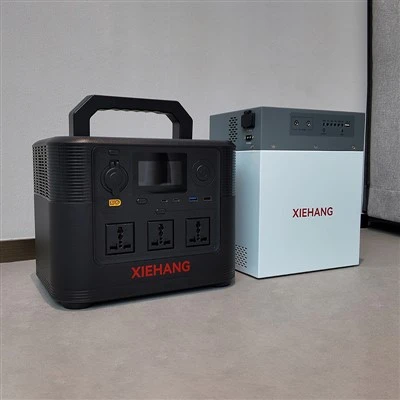
If you’re ready to learn more about how our home battery storage can work for your home and your local grid, we’d be happy to walk you through your options, answer any questions you have, and help you design a system that fits your needs and respects your neighborhood’s power needs. Reach out to us to set up a consultation. Let’s build a grid that works better for everyone, together.
Home Energy Storage References
- International Energy Agency. (2022). Global EV Outlook 2022. IEA Publications.
- U.S. Energy Information Administration. (2023). Residential Energy Storage Markets. EIA Annual Energy Outlook.
- GridWorks. (2021). The Duck Curve: Impact on Distributed Energy Resources. Journal of Power Systems Integration.
- California Public Utilities Commission. (2023). Residential Demand Response Program Outcomes. CPUC Energy Division.
- National Renewable Energy Laboratory. (2022). Home Battery Storage and Grid Reliability in Urban Neighborhoods. NREL Technical Report.
Zhejiang Xiehang New Energy Equipment Co., Ltd.
As one of the most professional home battery storage manufacturers and suppliers in China, our products have good reputation in the market. Please erst assured to wholesale custom made home battery storage from our factory. If you have any enquiry about cooperation, please feel free to email us.
Address: No.5 Hechen Road, Zhouwangmiao Town, Haining, Jiaxing City, Zhejiang Province, China
E-mail: dan.wu@xiehang.net
WebSite: https://www.shineonpower.com/
