Hey everyone, it’s Jake from the ESD Flooring team. If you’ve ever worked in a cleanroom, an electronics manufacturing line, or a lab handling sensitive semiconductors, you’ve probably heard the term "ESD flooring" thrown around. And if you’ve asked about how it actually works, you might’ve gotten a bunch of jargon that makes your head spin. Today, we’re cutting through the noise to answer one of the most common questions we get: What’s the static decay time of ESD flooring? No confusing acronym dumps, no generic corporate fluff—just real talk from someone who’s been selling this stuff for over a decade. ESD Flooring
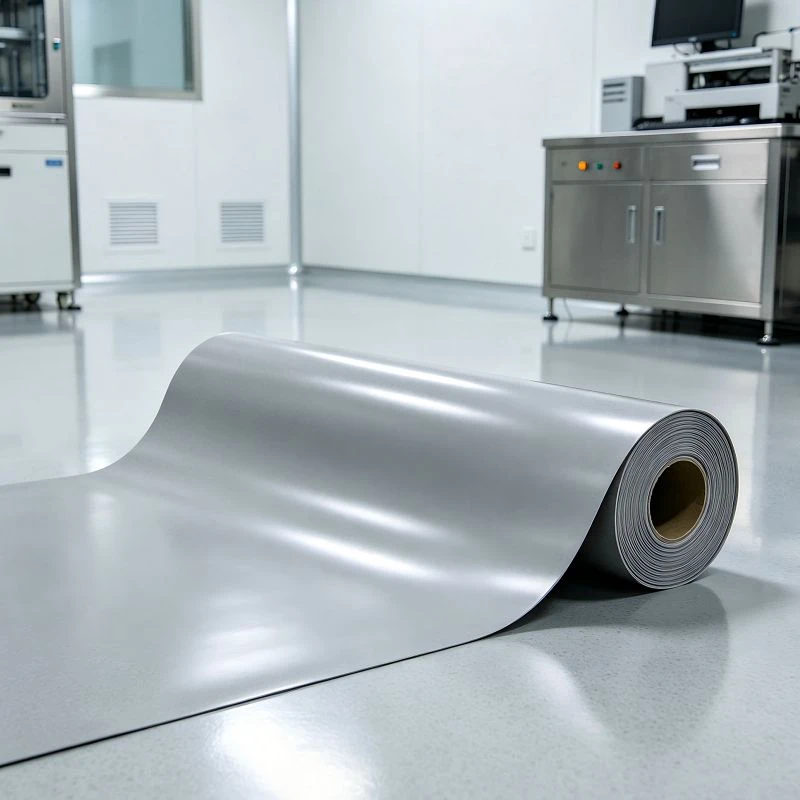
First off, let’s get one thing straight: Static decay time isn’t just a random number we pull out of thin air. It’s the core metric that tells you how good your ESD flooring is at actually doing its job—neutralizing harmful static electricity before it zaps a $10,000 microchip or sparks a fire in a volatile storage area. Think of it like a fire extinguisher’s response time: if it takes 10 minutes to put out a small grease fire, it’s useless, right? Same with static decay time.
Let’s start with the basics for anyone new here. Static electricity is that annoying shock you get when you touch a doorknob in winter, but on a production line, that tiny jolt can mess with electronics. ESD (Electrostatic Discharge) flooring is designed to stop that by dissipating built-up static charges instead of letting them build up and discharge suddenly. Decay time measures how long it takes for a known static charge (usually 1000 volts, that’s the standard test voltage) to drop to a safe threshold—typically 10 volts. The shorter that time, the better the flooring is at neutralizing static fast.
Now, here’s the part where most people get confused: not all ESD flooring is the same, so decay time isn’t a one-size-fits-all number. When we send samples out for testing (and we do this for every single batch we sell, no cutting corners), we follow the ANSI/ESD STM7.1 standard. That’s the gold standard for ESD material testing, not some random lab that calls itself “ESD certified” because they slapped a logo on a website. According to that standard, the ideal decay time for ESD flooring should be between 0.01 seconds and 2.0 seconds. Wait, that’s a huge range—so what’s the right number for your space?
Let’s break that down by use case, because that’s what actually matters. If you’re working with super-sensitive stuff like advanced semiconductors, MEMS (those tiny sensors in phones and cars), or medical devices like pacemaker components? You want the shorter end of the spectrum—closer to 0.01 to 0.1 seconds. At that speed, the flooring neutralizes static before it even has a chance to jump to a circuit board. I’ve seen companies cut corners here to save a few bucks and end up with a whole batch of defective chips because the decay time was 1.5 seconds—long enough for a static charge to migrate and fry the product mid-assembly. That’s way more expensive than buying the right flooring in the first place.
On the flip side, if you’re working in a slightly less sensitive area, like an assembly line for power tools that don’t have tiny circuit boards, or a lab that handles non-volatile materials? A decay time of 0.5 to 2.0 seconds is totally acceptable. It’s still way faster than the 10+ seconds a regular vinyl floor would take, which is basically useless for ESD control. We always tell people to match the decay time to their product’s sensitivity—don’t overbuy, but don’t underbuy either.
Here’s the thing that surprises a lot of our customers: decay time isn’t a static number that stays the same forever. Wait, what? Yeah, it changes based on a few factors that most suppliers won’t tell you. First, humidity. ESD flooring works by having a tiny amount of conductive material mixed in, right? If the air is super dry (like under 30% RH, relative humidity), those conductive particles don’t work as well, so decay time can stretch out. If humidity is between 40-60% RH, which is the sweet spot, you’ll get the exact number we tested for. We always warn customers in desert climates or winter months when indoor humidity drops to crank up their humidifiers a little if they want to keep decay time on target.
Then there’s wear and tear. If you have a high-traffic area with forklifts rolling over the floor all day, the top layer of ESD flooring can wear down over time. As that layer wears, you might lose a little of the conductive properties, so decay time can get a bit longer. That’s why we design our flooring with a durable, wear-resistant topcoat—we don’t skimp here because we know our customers need reliable performance for 10+ years. We also recommend retesting decay time every 2-3 years, especially in high-wear areas, to make sure it’s still in spec.
Another myth we hear all the time: “Higher conductivity means faster decay time.” That’s partially true, but too much conductivity is a problem. If a floor has decay time under 0.01 seconds, that’s actually a sign it’s too conductive—so conductive that you might get a shock yourself when you walk across it. Not ideal for anyone who’s standing on the floor for 8 hours a day, or for sensitive electronics that can be damaged by direct contact with high-conductivity surfaces. The sweet spot we all aim for with ESD flooring is that 0.01-2.0 second range—fast enough to stop static, but safe for people and products.
Wait, let’s talk about testing, because not all decay time tests are created equal. A lot of cheap ESD flooring suppliers will test their products in a perfect lab environment—controlled humidity, no foot traffic, smooth test probes. But when you install it in a real factory with 25% humidity and daily forklift use, the decay time changes. That’s why we test every single batch of our flooring in conditions that are as close to real-world use as possible. We don’t just do a quick test at 50% RH; we test at 30%, 50%, and 70% RH to give our customers a full picture of how it will perform no matter what their environment is. We also provide a test certificate with every order, so you can see exactly what decay time you’re getting, not just a generic number on a website.
I want to share a quick story from a customer we had a couple years back. They were a small electronics assembly shop, and they bought the cheapest ESD flooring they could find for a new line of phone chargers. They thought all ESD flooring was the same, so they just picked the one with the lowest price tag. A month later, they were having a 15% defect rate on their chargers—all because of static discharge. They called us in panic, and when we tested their old flooring, we found its decay time was around 4.5 seconds. Way over the ANSI standard, way too slow to stop static. We replaced it with our standard ESD flooring (decay time 0.2-0.8 seconds), and their defect rate dropped to under 1% within a week. That’s the difference between knowing what decay time means and just buying a product labeled “ESD.”
So, what should you do if you’re shopping for ESD flooring? First, don’t just ask “what’s the decay time?” Ask for the test conditions, the ANSI standard it’s tested to, and the range of decay times under different humidity levels. Second, match that range to your product’s sensitivity—if you’re handling semiconductors, don’t settle for anything over 1 second. Third, make sure the flooring is designed to keep that decay time consistent over years of use, not just brand new.
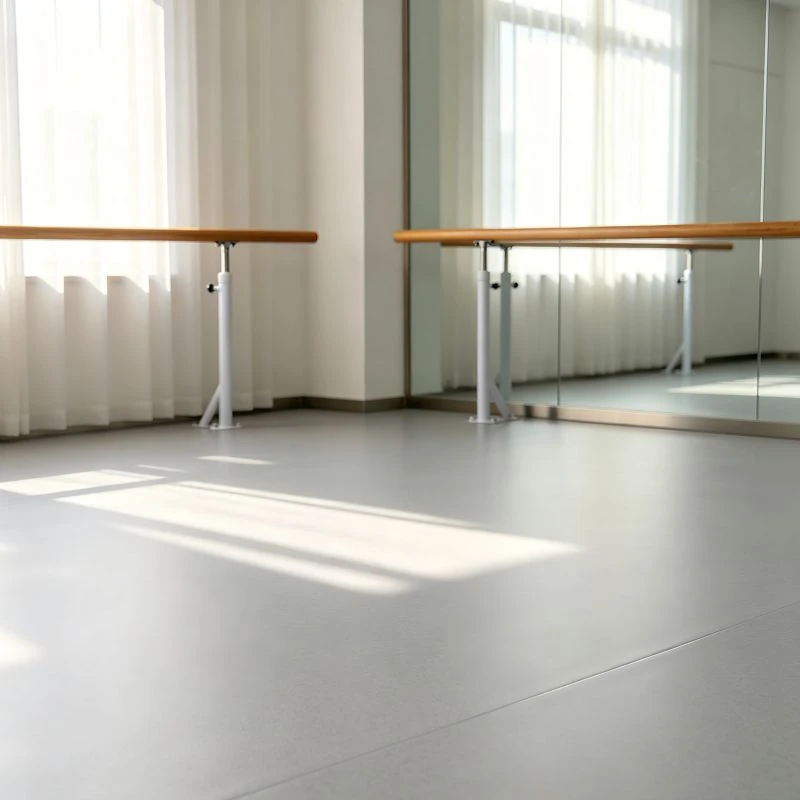
At the end of the day, ESD flooring’s decay time is the backbone of its performance. It’s not a marketing buzzword; it’s the number that keeps your products from getting zapped, your production lines running smoothly, and your business from losing thousands in defective inventory.
Homogeneous Vinyl Flooring If you’re not sure what decay time you need for your space, or you want to know more about our flooring’s exact specs, hit us up. We don’t do generic sales pitches—we’ll sit down with you, walk through your space, your products, and your needs, and help you pick the right ESD flooring that checks all the boxes. No fine print, no hidden fees, just real answers and a product that works when you need it to.
References
- ANSI/ESD STM7.1-2017, Standard Test Method for Electrostatic Decay Voltages of Materials
- ESD Association, “Electrostatic Discharge Control Handbook for Protection of Electrical and Electronic Parts, Assemblies and Equipment (Excluding Electrically Initiated Explosive Devices)”, ESD STM 15.2:2018
- Occupational Safety and Health Administration (OSHA), “Static Electricity Safety in the Workplace”, 2021
Qingdao Xinkailin Environmental Protection Materials Co., Ltd.
As one of the most professional esd flooring manufacturers and suppliers in China, we’re featured by quality products and good price. Please rest assured to buy premium esd flooring for sale here from our factory. Also, custom service is available.
Address: Room 618, Hedaxinduhui, No. 196 Tailiu Road, Shibei District, Qingdao City
E-mail: laura@xklflooring.com
WebSite: https://www.xklflooring.com/
