Hey everyone, and welcome to my little corner of the food tech space—where we talk about all the stuff that makes your favorite snacks, drinks, and even sweet treats work behind the scenes. I’ve been running a nanofiltration membrane supply business for about 8 years now, and if I had a nickel for every time a food processing team asked me, “Can your NF membranes actually separate sugars like we need?” I’d probably have enough to buy a whole lab’s worth of testing gear. Today, we’re breaking that question down real talk-style—no stuffy textbook jargon, just what I’ve seen work in actual food plants, the myths I’ve had to bust, and why nanofiltration (NF) is quietly becoming the unsung hero of sugar separation in the food industry. Nanofiltration Membrane
First, let’s get on the same page: when we talk about sugar separation in food processing, we’re not just splitting table sugar (sucrose) from a jar. Most of the time, food teams are dealing with way messier, more complex streams. Think about when you’re making apple juice—you end up with a mix of glucose, fructose, and sucrose, plus tiny bits of pectin and organic acids that make the juice taste bright and fresh. Or what about when you’re brewing kombucha? After fermentation, you’ve got leftover unfermented sugars (like maltose) mixed with acids and yeast that you want to strip out before bottling, so the kombucha doesn’t get fizzzy or spoil too fast. Even plant-based milks, like oat milk or almond milk, have a soup of different sugars that producers want to balance for taste and nutrition—no one wants an oat milk that’s way too cloying because it’s loaded with extra glucose. For years, teams relied on two main methods for this: expensive distillation (which uses tons of energy and makes a huge carbon footprint) and chromatography (which has a lot of moving parts, breaks easily, and needs tons of water for cleaning). That’s where NF comes in, and honestly, it’s a game-changer here.
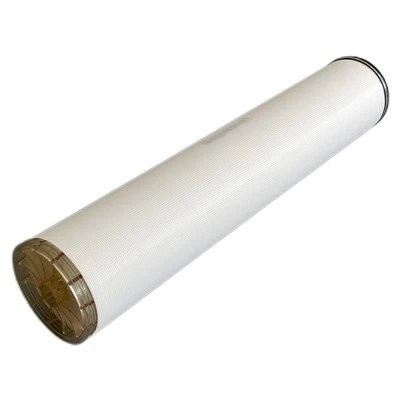
Wait, but let’s cut to the big question: does NF actually separate these sugars? The short answer is: yes, but not all sugars—you have to match the right NF membrane to the job, and that’s where most people mess up. NF membranes are super thin, porous sheets made from polyamide or other polymers, with tiny holes (nanometers small—like, way smaller than a strand of human hair) that let certain molecules pass through while blocking others. The key here is molecular weight cutoff (MWCO)—that’s the maximum size of molecule the membrane will let through. For sugar separation, you’re dealing with sugars that are pretty small: fructose is around 180 g/mol, glucose is 180, sucrose is 342, and maltose (the sugar from grain fermentation) is 342 too. So you need an NF membrane with a MWCO that’s tuned to sit between those sizes. Let’s say you want to separate fructose from sucrose: you get an NF membrane with a MWCO of, say, 200-250 g/mol. That membrane will let the smaller fructose (180 g/mol) slip right through, while blocking the bigger sucrose (342 g/mol) and any unwanted gunk like pectin or acid. It sounds simple, right? But here’s the thing: not all NF membranes are made equal. I’ve seen cheap, off-brand membranes from overseas that claim they can do this, but after 3 months of use, their pores clog up so bad they can’t separate anything at all. That’s why working with a supplier that tests every membrane for specific sugar separation is non-negotiable.
Now, let’s talk about real-world wins, because numbers don’t lie. Last year, I worked with a craft juice maker in Michigan that was struggling with their apple juice processing. They were using chromatography, which cost them $12,000 a month in operating costs, plus they had to shut down the line every week to replace broken resin in the chromatography columns. They switched to our custom NF membranes, tuned for separating the different sugars in apple juice, and within 3 months, their operating costs dropped by 40%. They also didn’t have to shut down the line for resin changes anymore—our membranes only need a quick backflush every 24 hours with water, which takes 10 minutes max. Another client is a kombucha brewery in Colorado that was having issues with batch consistency. Before, some batches had too much leftover maltose (which made the kombucha taste sweet and flat) and not enough tartness from the acids. Using our NF membranes, they can now strip out the maltose without losing the good tart acids, and every batch is almost identical. That’s the kind of stuff that makes food producers happy—less waste, less downtime, and a product that tastes the same every time, which is huge for keeping customers coming back.
But wait, let’s be honest—NF isn’t perfect, and there are limits to what it can do. You can’t use NF to separate every single sugar pair. For example, glucose and fructose are almost the same size (both 180 g/mol), so most standard NF membranes can’t tell them apart. If you need to split those two, you’ll need something else, like specialized chromatography or even reverse osmosis (RO), but RO uses way too much energy for most food applications. Another limit is fouling—we talked about this earlier, but it’s worth repeating. Food streams have all kinds of gunk: protein, pectin, yeast cells, even leftover dirt from raw ingredients. If that stuff sticks to the NF membrane pores, it clogs them up, making the separation way less effective, and you have to replace the membrane way sooner. But here’s the good news: we’ve developed a couple of modifications to our membranes that cut down on fouling big time. We add a hydrophilic coating that repels proteins and pectin, so less gunk sticks, and we also put a slight negative charge on the membrane. Most sugars are neutral, so that charge doesn’t affect them, but it repels tiny charged particles like acid residues that love to cling to membranes. I’ve seen these modified membranes last twice as long as uncoated ones in actual plant settings—so that’s a win for both the producer’s budget and the environment, because they’re not throwing out membranes every couple of months.
Another big perk of NF for sugar separation? It’s way more sustainable than the old methods. Food processing is one of the biggest industrial users of water and energy, so cutting down on that is a huge deal for both the bottom line and a brand’s public image. Let’s compare: distillation for sugar separation uses steam to heat the stream, which is super energy-heavy—like, 10x more energy than NF. Chromatography uses tons of water for cleaning the resin columns, plus it produces a lot of waste that has to be disposed of properly. NF, on the other hand, runs at room temperature (so no need to heat the stream, saving energy), uses way less water for cleaning, and doesn’t produce nearly as much waste. That’s a huge selling point for food brands right now, because consumers care more than ever about where their food comes from and how it’s made. I had a client a few months ago that told me they got a 15% boost in sales after they updated their packaging to say “uses nanofiltration for sugar separation, reducing water waste by 35%” — that’s the power of matching technology to what consumers care about.
Wait, but let’s address the elephant in the room: a lot of people think membrane technology is too new or too complicated for small food producers. I get it—if you’re a small craft jam maker with a 100-gallon a day operation, you’re probably not going to drop $50k on a new membrane system. But here’s the thing: we don’t just sell membranes—we work with producers to scale the system to their needs. We’ve worked with small juice makers, craft breweries, even artisanal candy companies, to set up small, modular NF systems that fit their production volume. No need for a huge, industrial-grade setup if you only process 500 gallons a week. We also offer free testing: we’ll send you a small sample of your actual sugar stream, run tests in our lab with our membranes, and show you exactly what kind of separation you can get, plus how much money you’ll save. No sales pitch, just real data. I think that’s what sets my business apart—we’re not just selling a product; we’re solving a problem that food producers actually have, not pushing a one-size-fits-all solution.
Let me also clear up a common myth: some people think nanofiltration will alter the taste of the final product. That’s a big no. Our membranes are designed to only separate specific molecules, not change their chemical makeup. If you’re separating sugars, you’re not adding any chemicals to the stream, and the temperature stays low, so the flavor compounds that make your apple juice taste like apple or your kombucha taste tangy stay exactly the same. The only thing you’re removing is the unwanted extra sugar or gunk that’s throwing off the balance. The Michigan juice maker I mentioned earlier did a taste test with their customers, and 90% of people couldn’t tell the difference between the NF-processed juice and their old chromatography juice, but they loved that it was cheaper and less wasteful.
So, wrapping this all up: can nanofiltration membranes be used for sugar separation in the food industry? The answer is a resounding yes, but only if you use the right membrane for the job, account for fouling, and work with a supplier that actually understands food processing, not just membrane science. It’s not a one-size-fits-all solution, but for most common sugar separation tasks—separating sucrose from fructose and glucose, stripping out leftover fermentable sugars from brews, balancing sugar content in plant-based foods, and so on—it’s more efficient, cheaper, and more sustainable than the traditional methods.
If you’re a food producer dealing with sugar separation headaches—whether you’re wasting money on expensive old tech, having batch consistency issues, or trying to hit those sustainability goals—don’t guess. Reach out. We can run tests on your specific stream, show you exactly what our membranes can do for your operation, and help you set up a system that fits your needs, no matter how big or small. No pressure, no fancy jargon, just real solutions for real food makers.
And for anyone still on the fence: next time you sip a juice or eat a snack with perfectly balanced sugar, there’s a good chance nanofiltration had a hand in making that happen. It’s the kind of tech that’s been around long enough to prove itself, but still underrated because most people don’t talk about the “behind-the-scenes” stuff in food production. But trust me, in the next few years, you’re going to hear a lot more about it—because it’s fixing problems that everyone in the food industry has been trying to solve for decades.
Hollow Fiber Ultrafiltration Membrane References
- Singh, R., et al. (2021). Nanofiltration for sugar separation in food processing: A review of performance, fouling, and sustainability. Journal of Food Engineering, 298, 110452.
- Muthukumarappan, K., et al. (2020). Pilot-scale nanofiltration of apple juice: Comparison with chromatography for sugar separation. LWT – Food Science and Technology, 131, 109785.
- Zhang, L., et al. (2019). Hydrophilic modified polyamide nanofiltration membranes for reduced fouling in food sugar processing. Journal of Membrane Science, 582, 217-226.
- European Food Safety Authority. (2022). Safety assessment of nanofiltration membranes for use in food production. EFSA Journal, 20(5), 721.
Hangzhou Nanoimp Environmental Technology Co., Ltd.
With abundant experience, we are one of the most professional nanofiltration membrane manufacturers and suppliers in China. Welcome to wholesale high quality nanofiltration membrane in stock here and get pricelist from our factory. We also accept customized orders.
Address: Road 25, Baiyang Street, Qiantang District, Hangzhou City, Zhejiang Province
E-mail: keith.wang@nano-sepmer.com
WebSite: https://www.nanoimp-membrane.com/
